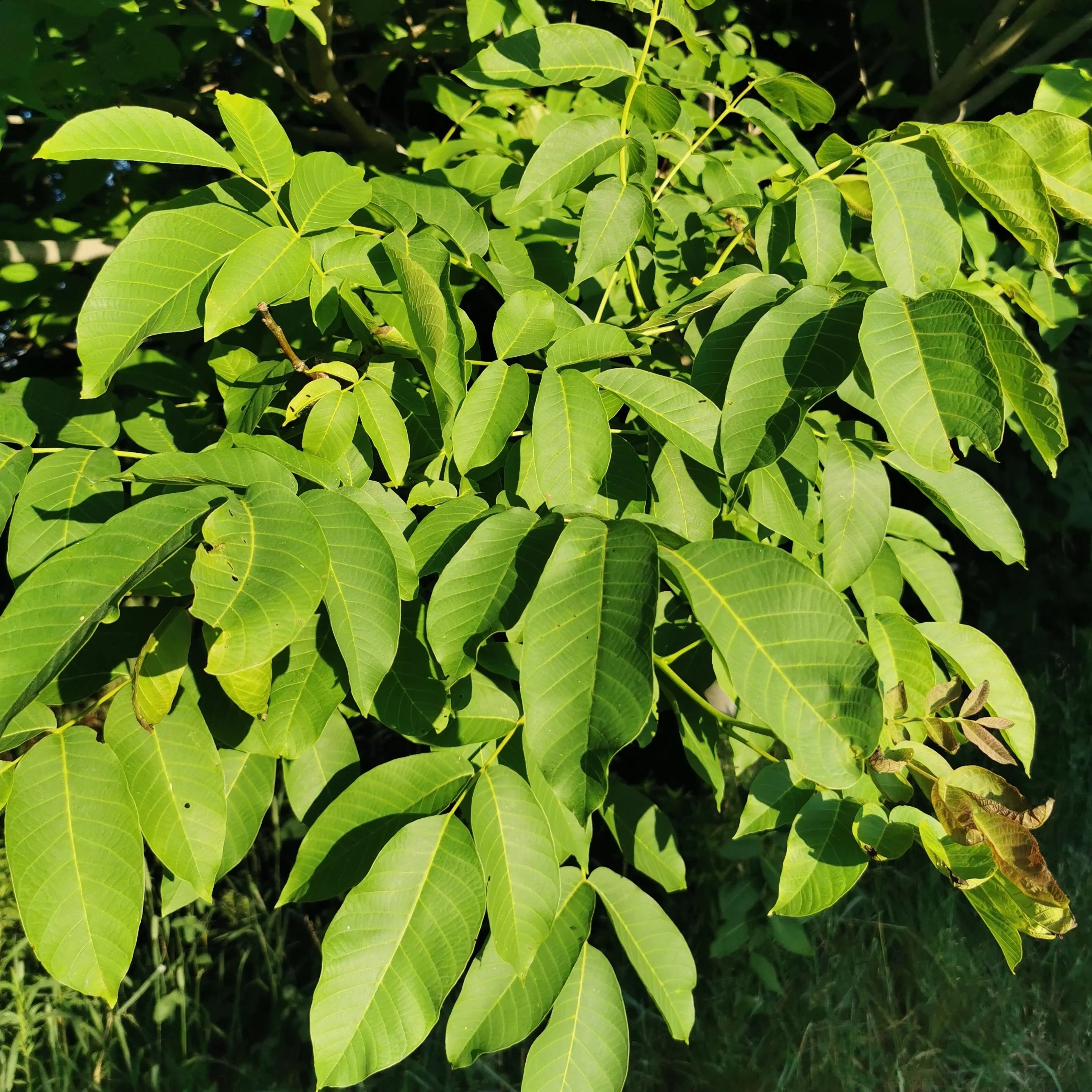
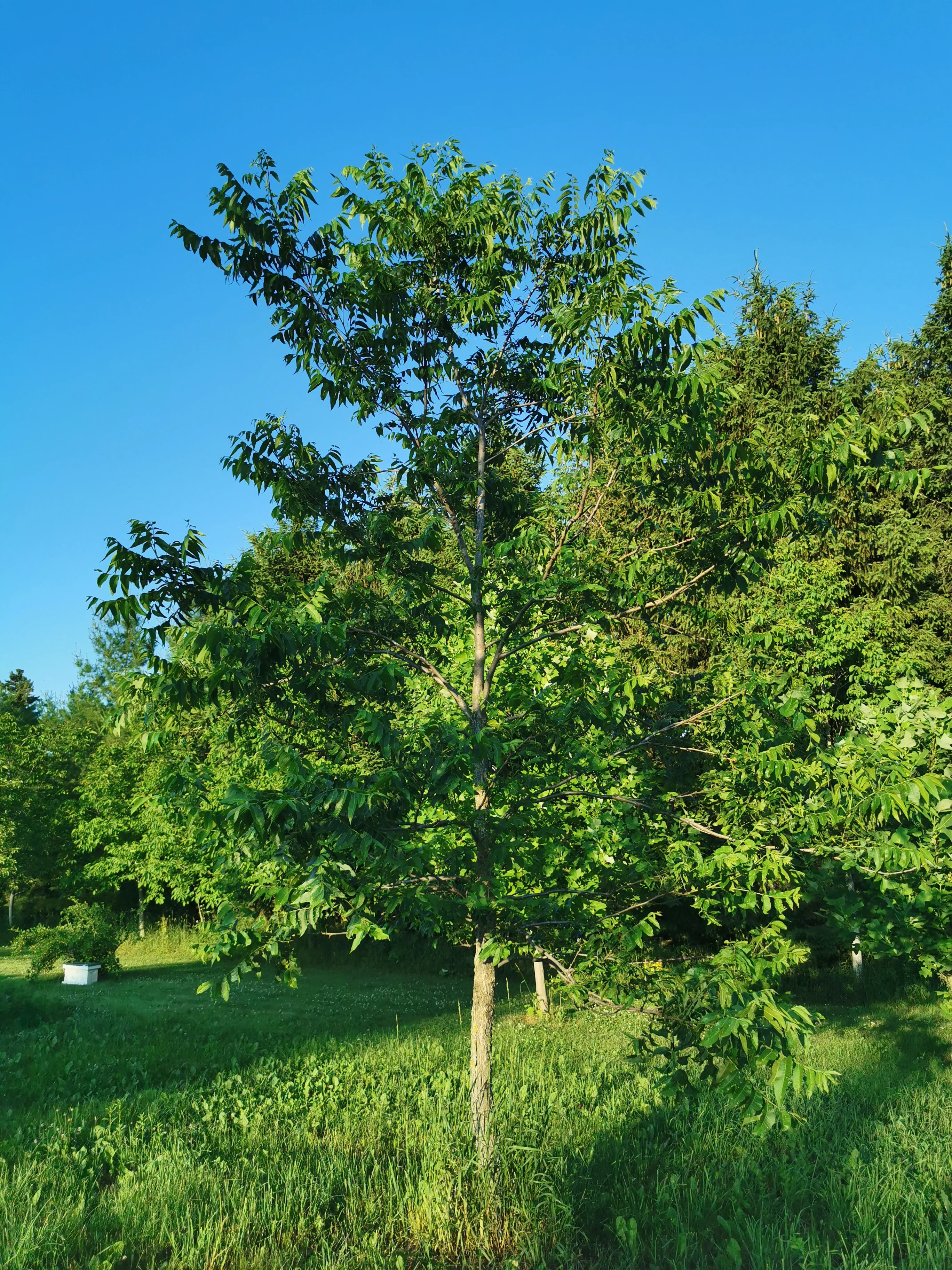
English Walnut Seedling Bareroot
Species: Juglans regia or hybrid. Our seeds are collected from trees that may have been cross-pollinated by closely related species so the resulting seedlings may be hybrids.
History: English Walnut (aka Persian/Carpathian Walnuts) is native from the Balkans to the Himalayas and China. It possibly originated in Iran and over time has been spread across the world by Alexander the Great, the Romans, trade along the Silk Road, and British colonizers. In Italy, there were legends of witches gathering under an old English Walnut tree in Benevento to perform sabbats which in turn has inspired works such as the ballet Il Noce de Benevento. Still commonly grown and cultivated today, China is the main producer of commercial walnuts.
Why We Grow It: Although they aren't native like our other walnut trees, English Walnuts are known for being easier to open than Black Walnuts and remain popular for a reason. Our seedlings come a mother tree near Listowel ON, an extra boon when Ontario grown English Walnuts are said to produce sweeter nuts than those from California! The sap can be boiled to make walnut syrup, which tastes very similar to maple syrup but with notes of caramel and butterscotch. The husks can be used to flavour beer, like hops.
Be mindful of the juglones in the in the roots/nut husks, they are toxic to many other species. They require a buffer of about 50'/30m from the edge of the trees canopy for juglone-sensitive plants. This article from The Garden Hoe has a helpful list of plants that tolerate juglones. However there are recent (2019) studies showing healthy soil high in organic matter and mycorrhizal fungi actually reduce the toxicity of juglones suggesting many plants can grow below juglans species in a healthy ecosystem - it will be interesting to see more study done in this area!
Original: $11.20
-70%$11.20
$3.36Product Information
Product Information
Shipping & Returns
Shipping & Returns
Description
Species: Juglans regia or hybrid. Our seeds are collected from trees that may have been cross-pollinated by closely related species so the resulting seedlings may be hybrids.
History: English Walnut (aka Persian/Carpathian Walnuts) is native from the Balkans to the Himalayas and China. It possibly originated in Iran and over time has been spread across the world by Alexander the Great, the Romans, trade along the Silk Road, and British colonizers. In Italy, there were legends of witches gathering under an old English Walnut tree in Benevento to perform sabbats which in turn has inspired works such as the ballet Il Noce de Benevento. Still commonly grown and cultivated today, China is the main producer of commercial walnuts.
Why We Grow It: Although they aren't native like our other walnut trees, English Walnuts are known for being easier to open than Black Walnuts and remain popular for a reason. Our seedlings come a mother tree near Listowel ON, an extra boon when Ontario grown English Walnuts are said to produce sweeter nuts than those from California! The sap can be boiled to make walnut syrup, which tastes very similar to maple syrup but with notes of caramel and butterscotch. The husks can be used to flavour beer, like hops.
Be mindful of the juglones in the in the roots/nut husks, they are toxic to many other species. They require a buffer of about 50'/30m from the edge of the trees canopy for juglone-sensitive plants. This article from The Garden Hoe has a helpful list of plants that tolerate juglones. However there are recent (2019) studies showing healthy soil high in organic matter and mycorrhizal fungi actually reduce the toxicity of juglones suggesting many plants can grow below juglans species in a healthy ecosystem - it will be interesting to see more study done in this area!