Thimbleberry Bareroot
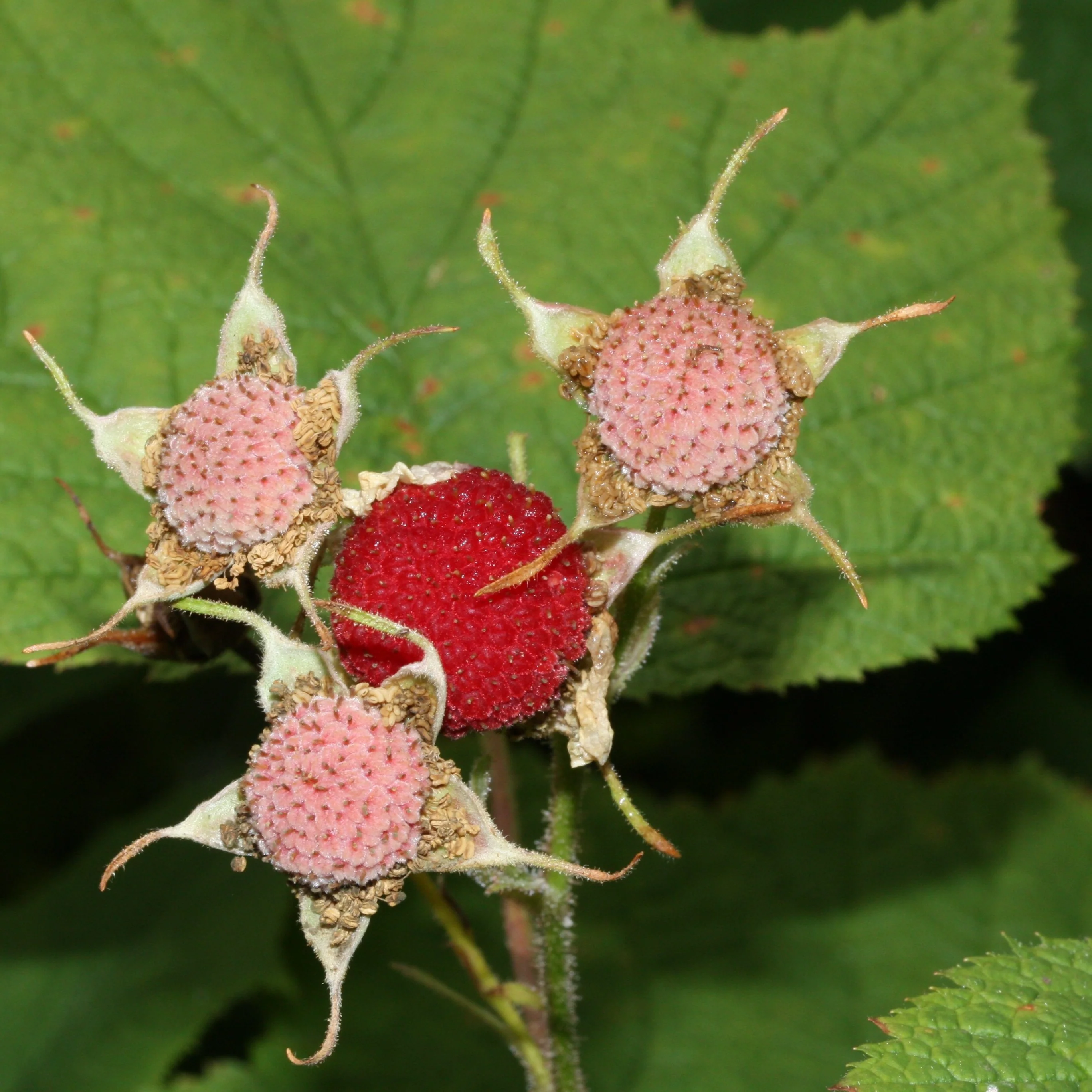
Species: Rubus parviflorus
History: Thimbleberries are a native plant closely related to raspberries and blackberries. Cultivated for edible, ornamental, and ecological reasons today, they have also historically been used by indigenous peoples as a source of food and medicine.
Why We Grow It: This is an excellent under-story plant that produces smaller, flatter berries than cultivated raspberries, but with a delicious sweet-tart flavour. Apparently young shoots can be harvested in spring, lightly peeled, and then boiled for an asparagus-like 'vegetable'- we haven't tried this yet, but would love to hear from you if you have! The thornless bush grows up to 7 feet tall, though can be kept smaller with pruning/trellising/tying down. The fruit grows best on 2-3 year old canes unlike raspberries, which makes this an ideal plant for living fences.
Original: $13.37
-70%$13.37
$4.01Product Information
Product Information
Shipping & Returns
Shipping & Returns
Description
Species: Rubus parviflorus
History: Thimbleberries are a native plant closely related to raspberries and blackberries. Cultivated for edible, ornamental, and ecological reasons today, they have also historically been used by indigenous peoples as a source of food and medicine.
Why We Grow It: This is an excellent under-story plant that produces smaller, flatter berries than cultivated raspberries, but with a delicious sweet-tart flavour. Apparently young shoots can be harvested in spring, lightly peeled, and then boiled for an asparagus-like 'vegetable'- we haven't tried this yet, but would love to hear from you if you have! The thornless bush grows up to 7 feet tall, though can be kept smaller with pruning/trellising/tying down. The fruit grows best on 2-3 year old canes unlike raspberries, which makes this an ideal plant for living fences.