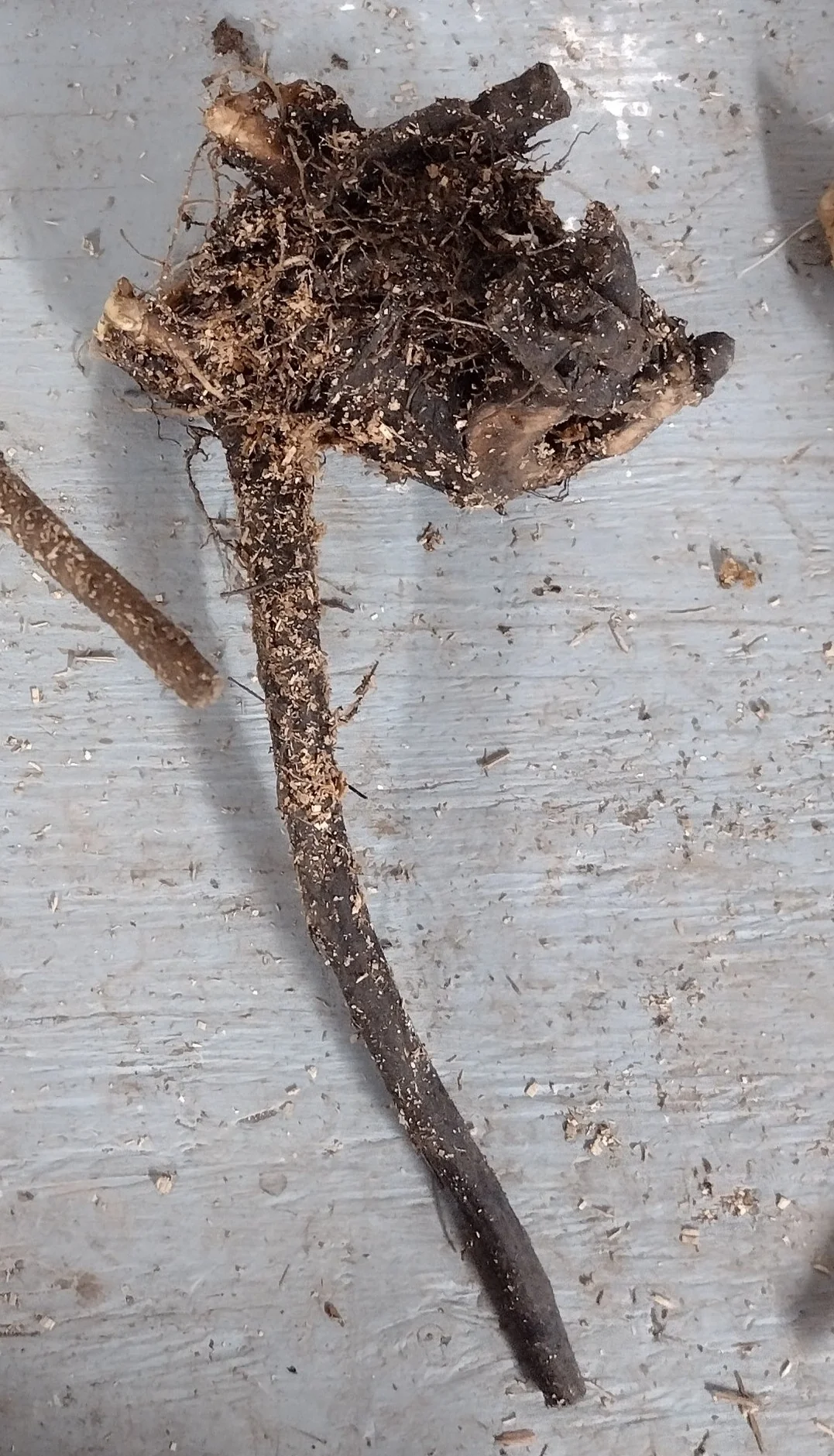
Comfrey Root
Species: Symphytum sp.
History: Comfrey plants are native to various continents around the world including Europe, Asia, and North America. Common names such as boneset and knitbone and its genus name referencing the Greek 'symphis' meaning 'growing together of bones' indicates it may have been used medicinally for mending bones. Comfrey is now popular as a permaculture plant. Our comfrey comes from a patch that has been on the property we rent for years and years, so we unfortunately do not know what variety it is. As far as we can tell, it does not spread via seed.
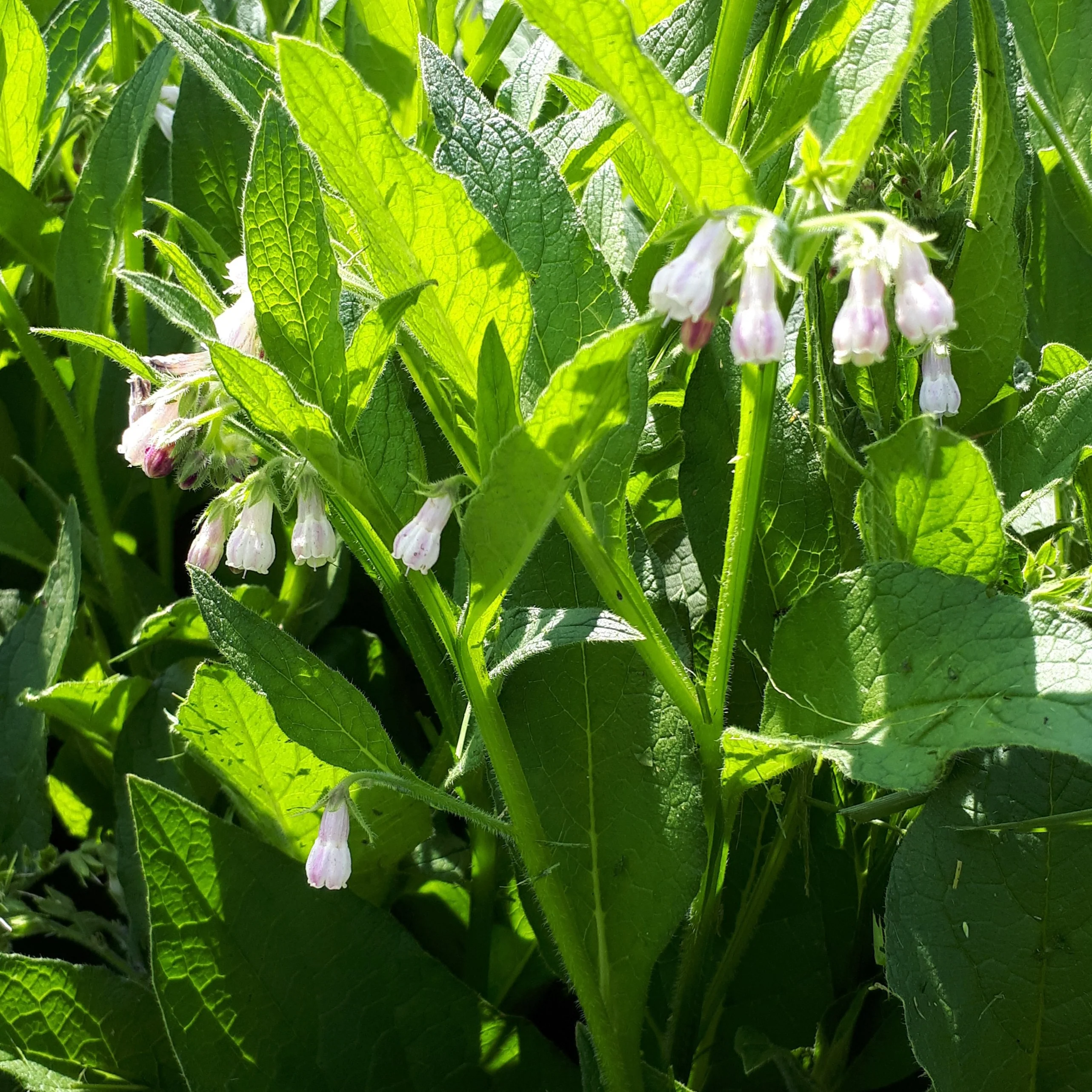
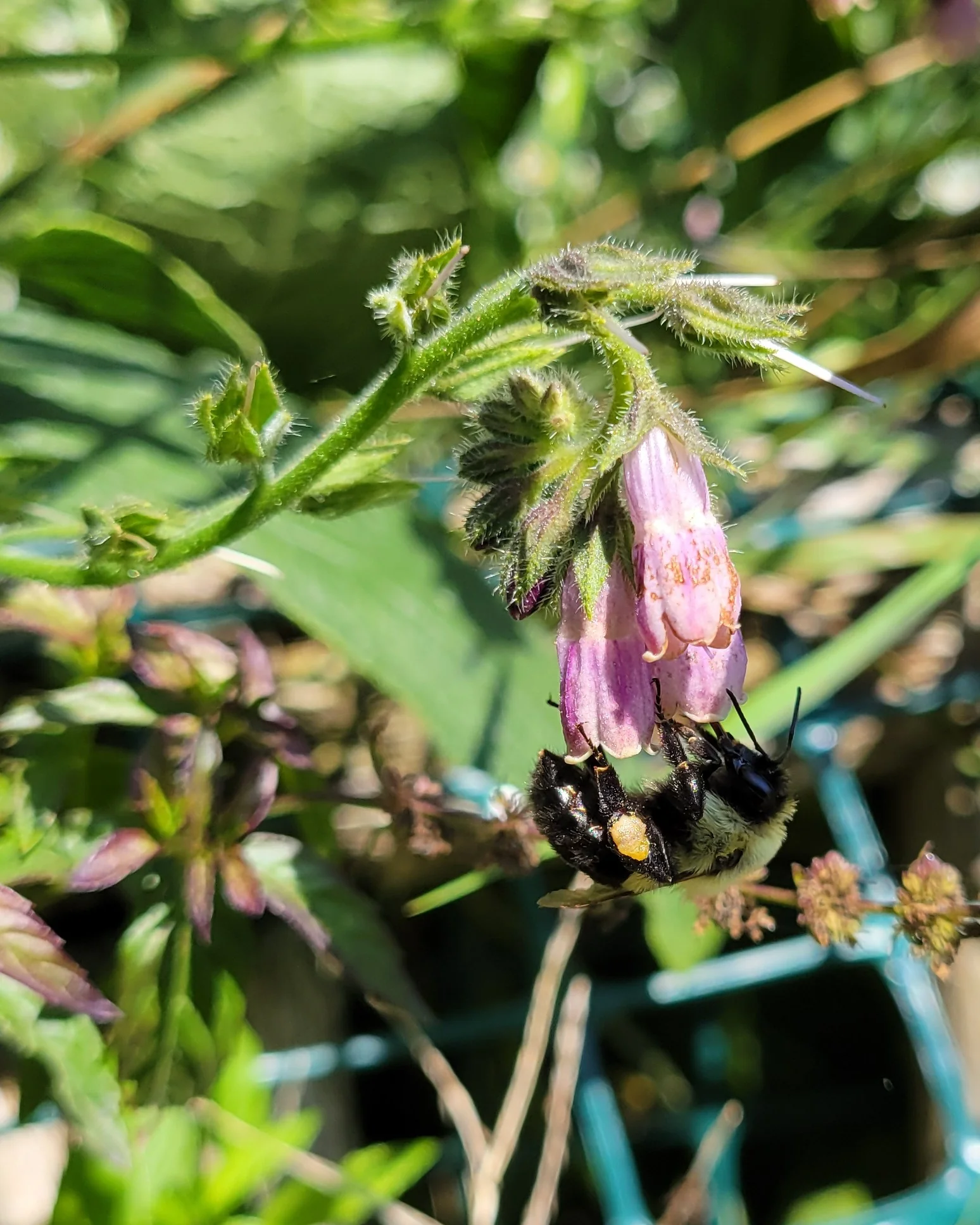
Why We Grow It: This classic permaculture plant grows incredibly deep tap roots, mining rich nutrients from deep below the soil surface. It's a living mulch that 'molts' 3-4 times each season. It's used in traditional medicine and creates a healthful compost tea full of calcium and potassium. It grows up to 70 cm tall, before molting down, and spreads slowly over the years. As an added benefit, both honey bees and bumble bees love visiting the blossoms too! While we do not know what variety our comfrey is, it does not appear to spread via seed.
Original: $6.14
-70%$6.14
$1.84Product Information
Product Information
Shipping & Returns
Shipping & Returns
Description
Species: Symphytum sp.
History: Comfrey plants are native to various continents around the world including Europe, Asia, and North America. Common names such as boneset and knitbone and its genus name referencing the Greek 'symphis' meaning 'growing together of bones' indicates it may have been used medicinally for mending bones. Comfrey is now popular as a permaculture plant. Our comfrey comes from a patch that has been on the property we rent for years and years, so we unfortunately do not know what variety it is. As far as we can tell, it does not spread via seed.
Why We Grow It: This classic permaculture plant grows incredibly deep tap roots, mining rich nutrients from deep below the soil surface. It's a living mulch that 'molts' 3-4 times each season. It's used in traditional medicine and creates a healthful compost tea full of calcium and potassium. It grows up to 70 cm tall, before molting down, and spreads slowly over the years. As an added benefit, both honey bees and bumble bees love visiting the blossoms too! While we do not know what variety our comfrey is, it does not appear to spread via seed.