Manchurian Crabapple Scionwood
Species: Malus baccata var. mandshurica or M. mandshurica depending on which taxonomist you ask!
History: Manchurian crabapples are native to China, eastern Russia, Japan, and North Korea where they have been used for rootstock and bonsai. It is quite attractive as an ornamental tree so has spread to Europe and North America as well. Thanks to its excellent cold-hardiness, it is often used in experiments to breed and graft more cold hardy apple varieties.
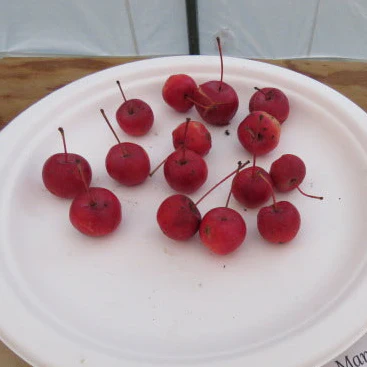
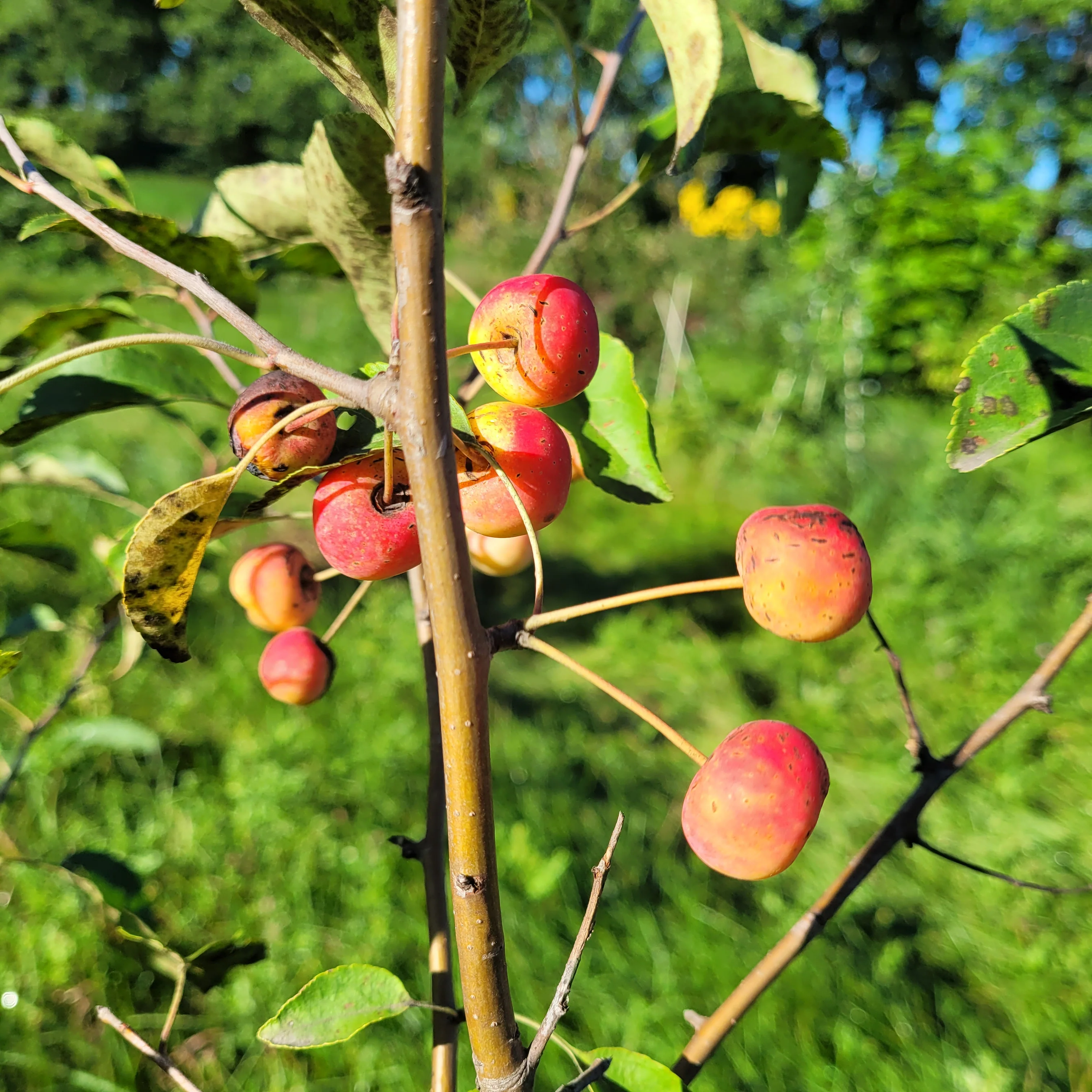
Why We Grow It: Manchurian crabapples are most commonly grown for their ornamental qualities, boasting large numbers of white flowers in the spring. The small, tart fruits produced by Manchurian crabapples are often a bit intense for eating, but do well in cider and jelly! If you don't want to eat them, they are also great for feeding wildlife.
Original: $6.14
-70%$6.14
$1.84Product Information
Product Information
Shipping & Returns
Shipping & Returns
Description
Species: Malus baccata var. mandshurica or M. mandshurica depending on which taxonomist you ask!
History: Manchurian crabapples are native to China, eastern Russia, Japan, and North Korea where they have been used for rootstock and bonsai. It is quite attractive as an ornamental tree so has spread to Europe and North America as well. Thanks to its excellent cold-hardiness, it is often used in experiments to breed and graft more cold hardy apple varieties.
Why We Grow It: Manchurian crabapples are most commonly grown for their ornamental qualities, boasting large numbers of white flowers in the spring. The small, tart fruits produced by Manchurian crabapples are often a bit intense for eating, but do well in cider and jelly! If you don't want to eat them, they are also great for feeding wildlife.